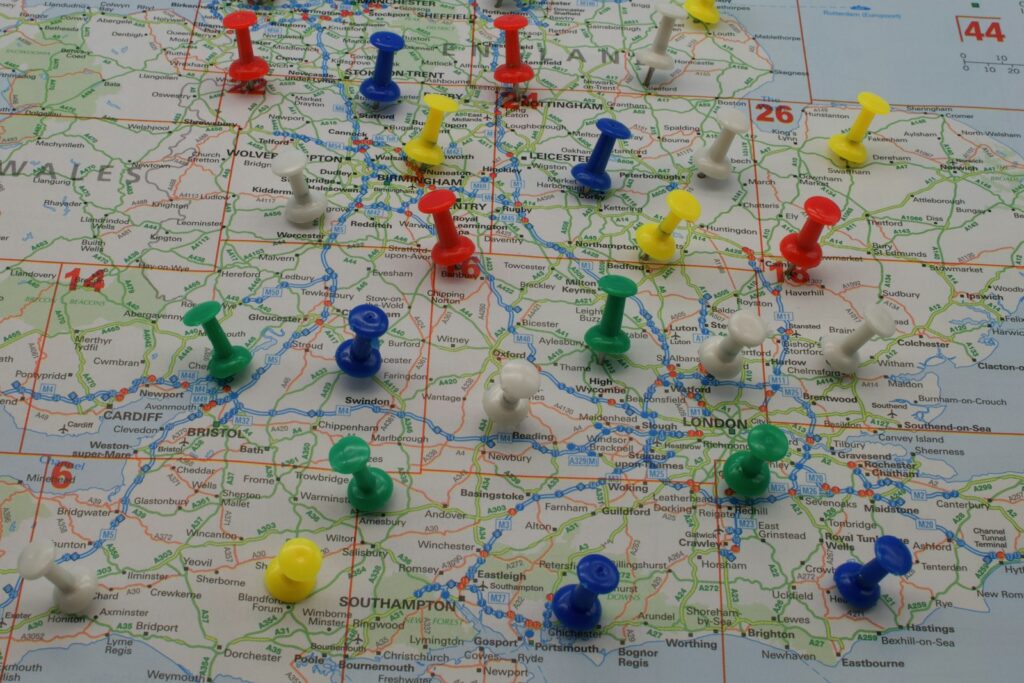
Forget Brexit, the real divide in Britain runs horizontally across the country somewhere around Birmingham. For centuries, the North and South of England have maintained distinct identities, and nothing illustrates this better than the words they use. What sounds perfectly normal in Manchester might draw blank stares in London, and vice versa.
This linguistic divide isn’t just about accents – though those are certainly dramatic – it’s about entirely different vocabularies that have evolved in relative isolation. Here’s your guide to navigating Britain’s great slang divide.
The Great Bread Roll Debate
Before we dive into slang, we must address the most contentious vocabulary issue in Britain: what to call a bread roll. This single item has more regional names than almost any other object in the English language.
Southern terms: Roll, bread roll
Northern terms: Bap, barm, barm cake, cob, teacake, stottie, muffin, batch
Mention the word “cob” in London, and they’ll think you’re talking about corn. Use “barm cake” in Brighton, and you’ll be met with utter confusion. The debate is so heated that it regularly trends on British Twitter.
Everyday Northern Slang
Nowt / Owt
Meaning: Nothing / Anything
These are perhaps the most iconic Northern words. Derived from Old English, they’ve survived in the North while disappearing from Southern speech entirely.
Example: “There’s nowt wrong with that” or “Is there owt to eat?”
Ginnel / Snicket / Jitty
Meaning: A narrow alleyway between buildings
The North has approximately seventeen words for this concept. Which one you use depends on exactly where you’re from – “ginnel” in Yorkshire, “snicket” in Leeds, “jitty” in Nottingham.
Mardy
Meaning: Moody, sulky, or grumpy
A beloved Northern term for someone in a bad mood. Made famous beyond the region by the Arctic Monkeys song “Mardy Bum.”
Example: “Stop being so mardy and come to the pub.”
Mither
Meaning: To bother, pester, or worry
Example: “Stop mithering me, I’ll do it later!”
Our Kid
Meaning: A sibling, close friend, or term of endearment
In the North, particularly Manchester and Liverpool, “our kid” refers to someone close to you, usually a brother or sister but sometimes a good mate.
Example: “Have you met our kid? He’s coming to the match with us.”
Brew
Meaning: A cup of tea
While understood nationwide, “brew” is quintessentially Northern. Southerners tend to say “cuppa.”
Example: “Stick the kettle on, I’m gasping for a brew.”
Ey Up
Meaning: Hello, or an expression of surprise
The classic Northern greeting. Variations include “ey up duck” in the Midlands.
Example: “Ey up! I haven’t seen you in ages!”
Champion
Meaning: Great, excellent
While the word exists everywhere, using “champion” as an exclamation of approval is distinctly Northern.
Example: “You got the job? Champion!”
Gander
Meaning: A look
Example: “Let’s have a gander at that.”
Nesh
Meaning: Sensitive to cold, unable to handle low temperatures
A word the South desperately needs but doesn’t have. Someone who’s nesh always complains about being cold.
Example: “Put a coat on if you’re that nesh.”
Everyday Southern Slang
Mate
Meaning: Friend
Yes, it’s used everywhere now, but the frequency and casual deployment of “mate” is distinctly Southern, especially London.
Example: “Alright mate, you good?”
Gutted
Meaning: Very disappointed
While understood nationally, Southerners use this with particular enthusiasm.
Example: “I’m absolutely gutted we lost the match.”
Dodgy
Meaning: Suspicious, unreliable, or low quality
Example: “That kebab shop looks a bit dodgy.”
Sorted
Meaning: Arranged, taken care of, or satisfactory
Example: “Don’t worry about tickets, I’ve got us sorted.”
Quid
Meaning: Pound (money)
The whole country uses this, but Southerners seem incapable of saying “pound” at all.
Example: “That’ll be twenty quid, mate.”
Knackered
Meaning: Exhausted
Another word used nationally but with particular frequency in the South.
Example: “I’m absolutely knackered after that commute.”
Banter
Meaning: Playful teasing and joking
The South, especially London, elevated banter to an art form and personality trait.
Example: “It’s just banter, don’t take it seriously.”
Proper
Meaning: Really, very, or authentic
Example: “That was a proper good night out.”
Chuffed
Meaning: Pleased, delighted
Example: “I’m proper chuffed with my new car.”
Words That Mean Different Things
Here’s where it gets confusing. Some words exist in both regions but mean entirely different things.
Dinner
North: The midday meal (lunch)
South: The evening meal
This causes genuine confusion in workplaces nationwide.
Tea
North: The evening meal
South: A cup of tea, or sometimes afternoon tea
When a Northerner says “I’m going home for my tea,” they mean dinner. When a Southerner says it, they mean an actual cup of tea.
Pants
North and South: Underwear
American visitors: Be warned, this does not mean trousers anywhere in Britain!
Sound
North (especially Liverpool): Good, reliable, excellent
South: Just… a noise
Example (Scouse): “He’s a sound lad” (He’s a good person)
The Midlands: No Man’s Land
The Midlands exist in fascinating linguistic limbo. Birmingham, Nottingham, and Leicester have their own distinct slang that often gets overlooked in the North-South debate.
Midlands specials include:
- Bostin’: Brilliant, great (Black Country)
- Tab: Cigarette
- Island: Roundabout
- Cob: That bread roll thing again
- Duck: Term of endearment (especially Nottingham)
Why the Divide Exists
The North-South linguistic divide has roots in Anglo-Saxon times, when different kingdoms spoke varying dialects of Old English. The Danelaw – the area of England under Viking control – roughly corresponds to where different vocabulary still survives today. Northern words like “laik” (to play) and “beck” (stream) have Scandinavian origins.
The Industrial Revolution further cemented these differences, as Northern cities developed their own working-class vocabularies while London’s influence dominated the South. The lack of mass media meant regional dialects could evolve independently for centuries.
Modern Blending
Today, thanks to television, social media, and internal migration, the lines are blurring. Young Londoners might say “mint” (excellent – Northern) while young Mancunians have adopted Southern phrases. British reality shows like Love Island have created a strange hybrid youth-speak that would confuse anyone over forty regardless of their region.
Yet the core differences persist. A Geordie taxi driver and a Cornwall local would still struggle to understand each other’s full vocabulary, despite speaking the same language.
Survival Tips for Americans
When visiting Britain, don’t panic about regional slang. Most Brits will happily explain unfamiliar terms and are often proud of their local vocabulary. A few practical tips:
- If someone in Yorkshire says “sithee,” they’re saying goodbye
- If a Scouser calls you “la” or “lad,” they’re being friendly
- If anyone offers you “dinner” at noon, accept – it’s lunch
- When in doubt, “cheers” works everywhere
The regional variations in British English are part of what makes the country so linguistically rich. Every town seems to have its own words, its own phrases, its own way of expressing the inexpressible. It’s one of the things that makes exploring Britain such an adventure – even if you thought you already spoke the language.
Which side of the divide do your favorite British slang terms come from? Let us know in the comments!