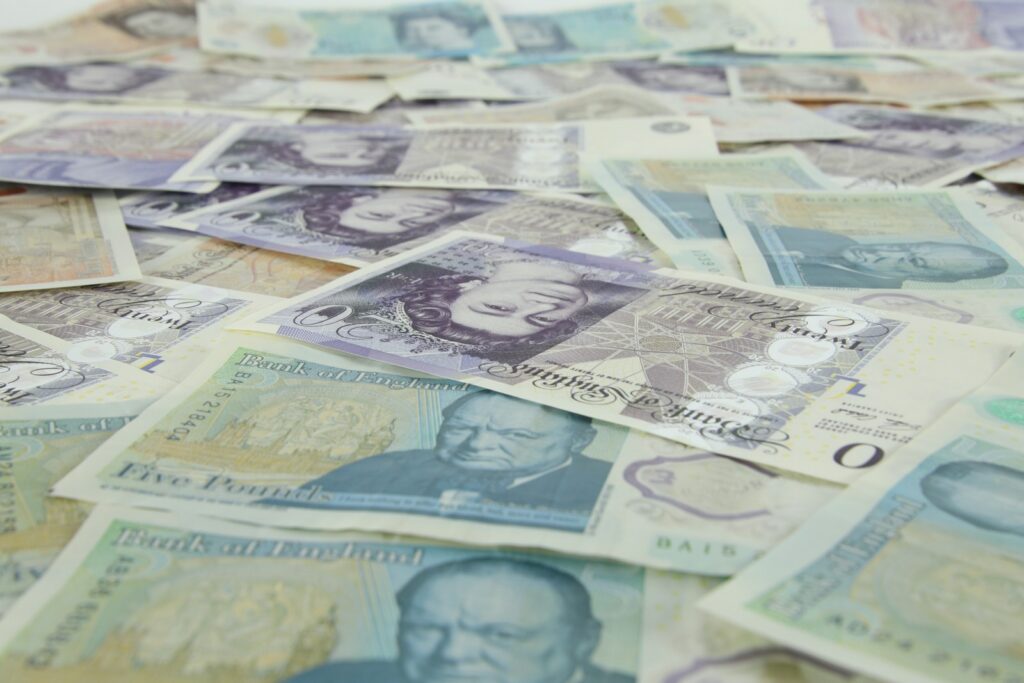
Ask a British person how much something costs, and you might get an answer in quid, nicker, sovs, or smackers. You might be told it costs a pony, a monkey, or even a bag of sand. If you’re in London, you could hear that it’s a score, a ton, or a grand – none of which mean what you think they mean.
Britain’s relationship with money slang is long, complicated, and wonderfully creative. From Cockney rhyming slang to market trader argot to centuries-old terms that survived decimalization, the British have more ways to talk about money than almost any other subject.
Here’s your comprehensive guide to British money slang – because knowing the vocabulary might just save you from being ripped off.
The Basics: What to Call British Currency
The official currency is the pound sterling (£), with 100 pence (p) to the pound. But almost nobody calls it that.
Pound – The standard term, but boring.
Quid – The universal slang term for pound. One quid, five quid, a hundred quid. Origin unknown, though theories include the Latin “quid pro quo” or the Gaelic “cuid” (share/portion). No plural form – it’s always “quid,” never “quids.”
Nicker – Also means pound. “That cost me fifty nicker.” Less common than quid but still widely used.
Sterling – Formal term for the currency. “Prices in sterling.”
Pee – Pence. “Fifty pee” = fifty pence. Adopted after decimalization in 1971.
Small Change: Coins
Copper – A penny or two-pence coin (both are copper-colored). “Have you got any coppers for the parking meter?”
Tuppence / Tuppenny – Two pence. From “two pence.” “I don’t give tuppence” means “I don’t care at all.”
Threepenny bit – Historical: the old three-penny coin (pre-1971). Still used in phrases: “Tight as a threepenny bit.”
Sixpence / Tanner – Historical: the old six-penny coin. “A sixpence” is still used metaphorically.
Bob – Historical: a shilling (twelve old pence, equal to 5 new pence after decimalization). Still used by older generations. “A few bob” = some money. “He’s got a few bob” = he’s wealthy.
Florin / Two-bob bit – Historical: two shillings.
Half crown – Historical: two shillings and sixpence.
Specific Amounts: The British Money Ladder
Here’s where it gets interesting. British money slang has specific terms for specific amounts:
Small Amounts
A tanner – Sixpence (historical, 2.5p equivalent)
A bob – A shilling (historical, 5p equivalent)
Five bob – Five shillings (25p equivalent)
Five Pounds (£5)
Fiver – The universal term for five pounds or a five-pound note. “Can you lend me a fiver?”
Lady Godiva – Cockney rhyming slang: fiver. Shortened to “Lady.”
Jackson – After Jackson Five (5).
Ten Pounds (£10)
Tenner – The standard term for ten pounds. “It’ll cost you a tenner.”
Ayrton – Cockney rhyming slang: Ayrton Senna = tenner. From the late F1 racing driver.
Paul McKenna – Also rhyming slang for tenner.
Pavarotti – Rhyming slang: Pavarotti = “a tenner” (tenner sounds like tenor, get it?).
Big Ben – Rhyming slang: Ben = ten.
Twenty Pounds (£20)
Score – Twenty pounds. From the old meaning of score as twenty. “That’ll set you back a score.”
Apple Core – Cockney rhyming slang for score.
Twenty-Five Pounds (£25)
Pony – Twenty-five pounds. Origin possibly from the Hindi word “poni” meaning small, or from the amount needed to pay off small gambling debts. “That shirt cost me a pony.”
Fifty Pounds (£50)
Bullseye – Fifty pounds. From the score in darts (the bullseye is worth 50 points).
McGarrett – Rhyming slang from Hawaii Five-O’s Steve McGarrett. “Fifty” sounds like “Five-O.”
One Hundred Pounds (£100)
Ton – One hundred pounds. “The repair cost a ton.” Also used for 100 miles per hour. Origin possibly from French “cent” (hundred).
Century – One hundred pounds, like in cricket scoring.
One-er – One hundred pounds.
Five Hundred Pounds (£500)
Monkey – Five hundred pounds. Origin disputed; possibly from British Indian army slang (the 500-rupee note had a monkey on it), or from gambling terminology.
One Thousand Pounds (£1,000)
Grand – One thousand pounds. “That car cost ten grand.” This term has been adopted worldwide.
K – One thousand (from kilo). “She earns 50K a year.”
Large – One thousand pounds. “A bag of sand” (see below) or “a bag” = a grand.
Bag of Sand – Cockney rhyming slang: bag of sand = grand. Often shortened to “a bag.”
Gorilla – One thousand pounds. Following the monkey theme in animal money slang.
Higher Amounts
Bar – One million pounds. Rare, but used in financial circles.
Market Trader and Gambling Slang
Market traders and bookmakers developed elaborate slang to discuss money without customers understanding:
Carpet – Three pounds. Possibly from “carpet bag” rhyming with “drag” (three months in prison).
Rouf – Four pounds (backslang: four spelled backward-ish).
Commodore – Fifteen pounds.
Score – Twenty pounds.
Cockle – Ten pounds. From “cock and hen” (rhyming slang for ten).
Archer – Two thousand pounds. Named after Jeffrey Archer, who allegedly paid £2,000 to a sex worker. Relatively modern slang.
Cockney Rhyming Slang for Money
Cockney rhyming slang offers creative alternatives:
Bread and honey = Money (shortened to “bread”). “I haven’t got any bread.”
Bees and honey = Money
Bread = Money (shortened from bread and honey)
Dosh = Money (possibly from “doss house” or an African origin)
Wonga = Money (possibly from Romany)
Sausage and mash = Cash. “Have you got any sausage?”
Poppy = Money (from “poppy red” = bread, which = bread and honey = money). Complicated, I know.
Oxford scholar = Dollar (used for five shillings in old money)
Macaroni = Pony (£25)
Plum and cherry = Very (wealthy). “He’s plum and cherry.”
General Terms for Money
Beyond specific amounts, British slang has numerous words for money in general:
Dosh – Money. “He’s rolling in dosh.”
Wonga – Money. Made famous by a controversial payday loan company.
Brass – Money (Northern English). “Where there’s muck, there’s brass.”
Dough – Money. “Rolling in dough.”
Spondulicks / Spondulix – Money. A wonderfully old-fashioned term.
Readies – Cash, ready money. “Have you got the readies?”
Wedge – A bundle of money. “He had a big wedge of notes.”
Loot – Money. Originally meant stolen goods.
Lolly – Money. Possibly from Romany.
Moolah – Money. American origin but used in Britain.
Ackers – Money. Military slang from Egypt (from the Egyptian piastre).
Shrapnel – Small change, coins. “I’ve just got shrapnel left.”
Smackers – Pounds. “A hundred smackers.”
Sovs – Pounds. From sovereigns (gold coins).
Notes – Paper money. “Have you got it in notes?”
Folding stuff – Paper money. “I prefer the folding stuff.”
Beer tokens – Money (humorous). “Time to spend some beer tokens.”
Historical Terms That Survived
Even after decimalization in 1971, which abolished shillings, florins, and the like, some terms survived:
Bob – Shilling (still used: “costs a few bob”)
Tanner – Sixpence (rare now, but some older people still use it)
Half a crown – Used metaphorically or by older generations
Guinea – £1.05 (21 old shillings). Still used for pricing horses, legal fees, and luxury goods, keeping a posh association.
Class and Regional Variations
Money slang varies by class and region:
Working class / London: Cockney rhyming slang predominates. Quid, nicker, pony, monkey.
Northern England: “Brass” is particularly common. “Where there’s muck there’s brass.”
Scotland: “Bawbees” for money (historical), still used occasionally.
Upper class: More likely to use “pounds” or avoid slang, though “grand” is universal.
Financial industry: “K” for thousands, “bar” for million, plus various trader slang.
Being “Skint” – Terms for Having No Money
British slang also covers the state of having no money:
Skint – Broke, having no money. “I’m completely skint until payday.”
Boracic – Broke (from “boracic lint” = skint in rhyming slang).
Brassic – Same as boracic.
Stony broke – Completely without money.
Hard up – Short of money.
Strapped (for cash) – Low on money.
On the breadline – In poverty.
Haven’t got two pennies to rub together – Extremely poor.
Why Does Britain Have So Much Money Slang?
Several factors contribute to Britain’s wealth of money vocabulary:
- Class consciousness: Different social classes developed different vocabularies, with working-class slang being particularly creative.
Practical Tips for Americans
When you’re in Britain:
The richness of British money slang reflects a culture that loves wordplay, values discretion, and has a long, complicated relationship with class and commerce. Whether you’re spending a few bob at a market or negotiating something worth a monkey, knowing the vocabulary helps you feel – and sound – like less of a tourist.
Just remember: never pay over the odds, always know your onions, and if something costs an arm and a leg, it’s probably not worth it.
What British money slang have you encountered? Did we miss any? Share your favorite terms in the comments!
