You’ve studied your British vocabulary. You know “lift” means elevator and “lorry” means truck. You’re feeling confident about navigating the UK. Then you walk into a café and someone offers you a “bacon sarnie with brown sauce” and asks if you want “chips or jacket with that,” and suddenly you’re lost again.
British food vocabulary is a minefield of regional variations, rhyming slang, and terms that sound vaguely inappropriate to American ears. Here’s your guide to eating your way through Britain without accidentally ordering something you didn’t want – or missing something delicious because you didn’t understand what it was.
The Basics: Meals
Brekkie / Breaky – Breakfast. A casual, affectionate term for the most important meal of the day.
Elevenses – A mid-morning snack, traditionally around 11 AM. Usually tea and biscuits. It’s like second breakfast for hobbits, but British.
Dinner – In much of Northern England and among older generations everywhere, this means the midday meal (what Americans call lunch). In the South and among younger people, it means the evening meal. Context is everything.
Tea – The evening meal, particularly in the North. “What’s for tea?” means “What’s for dinner?” Confusingly, “tea” can also mean the beverage, the meal of afternoon tea (sandwiches and cakes), or simply a cup of tea. Good luck.
Supper – A light evening meal or late-night snack. Upper-class families traditionally had “supper” rather than “tea” for dinner.
Afters – Dessert. “What’s for afters?”
Pudding / Pud – Also dessert, confusingly. In Britain, “pudding” is both a specific category of dishes AND a general term for the dessert course. “What’s for pudding?” means “What’s for dessert?”
Sandwiches and Snacks
Sarnie – Sandwich. “Bacon sarnie” is a bacon sandwich, one of Britain’s greatest hangover cures.
Butty – Also a sandwich, particularly in the North. A “chip butty” is chips (fries) in bread with butter – carbs on carbs, gloriously.
Bap – A soft bread roll. A “bacon bap” is a bacon sandwich in a soft roll. (Note: What you call this bread roll varies wildly by region – it could be a bap, barm, cob, roll, batch, or teacake depending on where you are.)
Barm / Barm Cake – A bread roll in Lancashire. “Chip barm” = chip butty.
Cob – A bread roll in the Midlands, particularly Nottingham.
Stottie – A large, flat, round bread from Newcastle.
Toastie – A toasted sandwich, typically made in a sandwich press. A “cheese toastie” is the British equivalent of a grilled cheese.
Sanger – Yet another word for sandwich, though less common.
Chips and Potatoes
Chips – French fries, but thicker. British chips are chunky, often soft inside, and served with everything from fish to curry. American “chips” are called “crisps” in Britain.
Crisps – Potato chips. Walkers (owned by Lay’s) is the dominant brand. British crisp flavors include “prawn cocktail,” “roast chicken,” and “Worcestershire sauce.”
Jacket Potato / Jacket – A baked potato. “Jacket” refers to the skin. “Jacket with beans” means a baked potato with baked beans on top.
Mash – Mashed potatoes.
Roasties – Roast potatoes. Essential to a Sunday roast.
Tatties – Potatoes, particularly in Scotland.
Neeps – Turnips (specifically swede/rutabaga) in Scotland. “Neeps and tatties” is the traditional accompaniment to haggis.
Wedges – Potato wedges, a pub food staple.
Meat and Savory Dishes
Bangers – Sausages. “Bangers and mash” is sausages with mashed potato and onion gravy.
Rashers – Slices of bacon. British bacon is closer to ham than American streaky bacon.
Streaky – Streaky bacon, similar to American bacon. When ordering a fry-up, you might be asked “back or streaky?”
Back Bacon – The standard British bacon cut, from the loin. Less fatty than streaky.
Mince – Ground beef (or other ground meat). “Mince and tatties” is a classic Scottish dish.
Joint – A large piece of meat for roasting. “Sunday joint” is the traditional roast.
Gammon – A thick slice of cured ham, often served with egg and chips.
Faggots – Traditional meatballs made from offal (usually pig’s heart, liver, and belly). A West Country and Midlands specialty. Yes, Americans, that’s really what they’re called.
Black Pudding – Blood sausage made with pork blood, fat, and oatmeal. Essential to a full English breakfast.
White Pudding – Similar to black pudding but without the blood. More common in Scotland and Ireland.
Haggis – Scotland’s national dish: sheep’s heart, liver, and lungs mixed with oatmeal and spices, traditionally cooked in a sheep’s stomach. Far more delicious than it sounds.
Toad in the Hole – Sausages baked in Yorkshire pudding batter. Comfort food at its finest.
Bubble and Squeak – Fried leftover vegetables (traditionally cabbage and potato) from a roast dinner. The name comes from the sounds it makes while cooking.
Spotted Dick – A traditional steamed suet pudding with dried fruit (the “spots”). Yes, really. It’s delicious with custard.
Sweet Things
Biscuit – A cookie. British biscuits are cookies; American biscuits are closer to British scones.
Biccy – Casual term for biscuit. “Fancy a biccy with your tea?”
Digestive – A slightly sweet, wholemeal biscuit. Often chocolate-covered. The UK’s bestselling biscuit and essential for dunking in tea.
Hobnob – A oat-based biscuit, excellent for tea-dunking due to structural integrity.
Custard Cream – Two biscuits sandwiched with vanilla custard-flavored cream. A British institution.
Jammy Dodger – A biscuit with jam in the center, visible through a heart-shaped cutout.
Scone – Pronounced “skon” or “skone” depending on who you ask (and they WILL argue). A small cake served with clotted cream and jam, essential to cream tea.
Clotted Cream – Thick, rich cream from Devon and Cornwall. Spoonable, spreadable, heavenly. Not the same as whipped cream.
Treacle – A syrup similar to molasses but lighter. “Black treacle” is darker; “golden syrup” is the lighter version.
Flapjack – In Britain, this is a chewy oat bar made with butter and golden syrup. NOT a pancake (that confusion has caused real distress for Americans expecting breakfast food).
Trifle – Layers of sponge cake, fruit, jelly (Jell-O), custard, and cream. A celebration dessert.
Jelly – Jell-O, not jam. “Jelly and ice cream” is a classic children’s party dessert.
Jam – What Americans call jelly (fruit preserves).
Squash – A concentrated fruit drink that you dilute with water. Not a vegetable.
Cordial – Similar to squash – concentrated fruit syrup mixed with water.
Hundreds and Thousands – Tiny sugar sprinkles for decorating cakes. Americans might call them “jimmies” or “sprinkles.”
Fairy Cakes – Small cupcakes, usually simply decorated.
Swiss Roll – A rolled sponge cake with jam and cream inside.
Banoffee – A portmanteau of banana and toffee. “Banoffee pie” is a cream pie with bananas and toffee.
Meals and Dishes
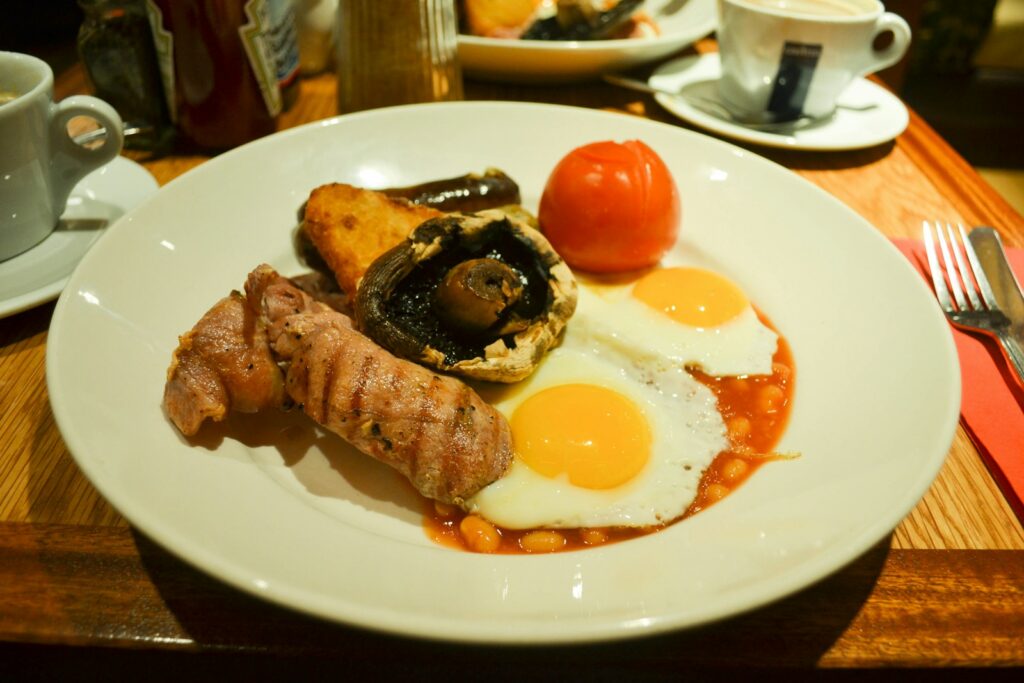
Full English – The traditional English breakfast: bacon, eggs, sausages, baked beans, toast, tomatoes, mushrooms, and often black pudding and hash browns. Regional variations exist (Full Scottish, Full Welsh, Ulster Fry).
Fry-Up – Another term for a full English breakfast.
Sunday Roast – The traditional Sunday lunch: roasted meat (beef, chicken, lamb, or pork), roast potatoes, vegetables, Yorkshire pudding, and gravy.
Ploughman’s Lunch – A cold pub lunch of cheese, bread, pickle (chutney), and salad. Sometimes includes ham or pâté.
Cream Tea – Scones served with clotted cream and jam, plus a pot of tea. A Devon and Cornwall specialty.
High Tea – Historically a working-class evening meal combining tea with substantial food. Not the same as “afternoon tea” (which is the fancy sandwiches-and-cakes affair). Often confused.
Fish and Chips – Britain’s national dish. Battered and fried fish (traditionally cod or haddock) with thick-cut chips. Properly served wrapped in paper with salt and vinegar.
Fish Supper – Scottish term for fish and chips.
Condiments and Extras
Brown Sauce – A tangy, spicy sauce (HP Sauce is the most famous brand) that goes on bacon sandwiches, fry-ups, and various other things. No American equivalent exists.
Salad Cream – A tangy, creamy dressing that is NOT mayonnaise. Tastes sweeter and sharper. Beloved on sandwiches.
Piccalilli – A bright yellow relish of pickled vegetables in a mustard sauce.
Branston Pickle – A chunky, sweet brown pickle that goes with cheese, in sandwiches, and on ploughman’s lunches.
Marmite – A dark, salty yeast extract spread. “You either love it or hate it” is literally their slogan. There is no middle ground.
Clotted Cream – Yes, it deserves mention twice. This thick, rich Devon/Cornwall cream is essential and life-changing.
Custard – Pourable, yellow, vanilla-flavored sauce for puddings. Often from a tin (Bird’s custard powder is traditional).
Gravy – Sauce made from meat juices. Essential to Sunday roasts and poured liberally over everything.
Casual Food Terms
Nosh – Food, or to eat. “Good nosh” means good food. “Having a nosh” means eating.
Grub – Food, casual term.
Scran – Food, particularly in Northern England and Scotland.
Nosh-Up – A big meal, a feast.
Slap-Up Meal – A large, excellent meal. “A slap-up dinner.”
Takeaway – Takeout food. “Getting a takeaway” means ordering food to go.
Chippy / Chip Shop – A fish and chips shop.
Caff – A casual café, often a “greasy spoon” (a cheap, basic restaurant serving fry-ups).
Sarnie Run – Going to get sandwiches, usually for the office.
Moreish – Describes food that makes you want more. “These crisps are really moreish.”
Scrummy / Scrumptious – Delicious.
Peckish – Slightly hungry, wanting a snack.
Stuffed – Full, having eaten too much.
Gutted – Besides meaning disappointed, can mean very full after eating.
A Note on Asking for What You Want
When ordering food in Britain, a few translation tips:
- Ask for “chips” to get fries
- Ask for “crisps” to get chips
- Ask for “jam” to get jelly
- Ask for “jelly” to get Jell-O
- Ask for “biscuits” to get cookies
- “Pudding” can mean the entire dessert course
- “Aubergine” is eggplant
- “Courgette” is zucchini
- “Rocket” is arugula
- “Coriander” is cilantro
- “Swede” is rutabaga
- “Prawns” are shrimp (though technically different)
- “Mince” is ground beef
And remember: when in doubt, just point at the menu. The British won’t judge you for being American – they’ll just be quietly pleased you’re trying their food.
What British food terms have left you baffled – or delighted? Share your culinary adventures in the comments!